Interviews 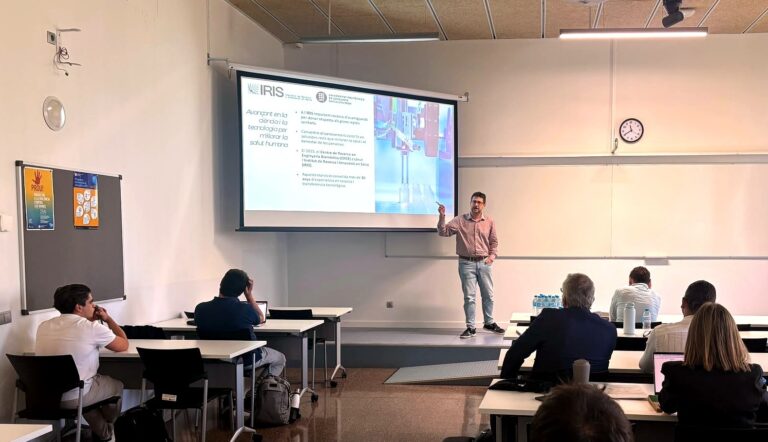
September 16, 2026


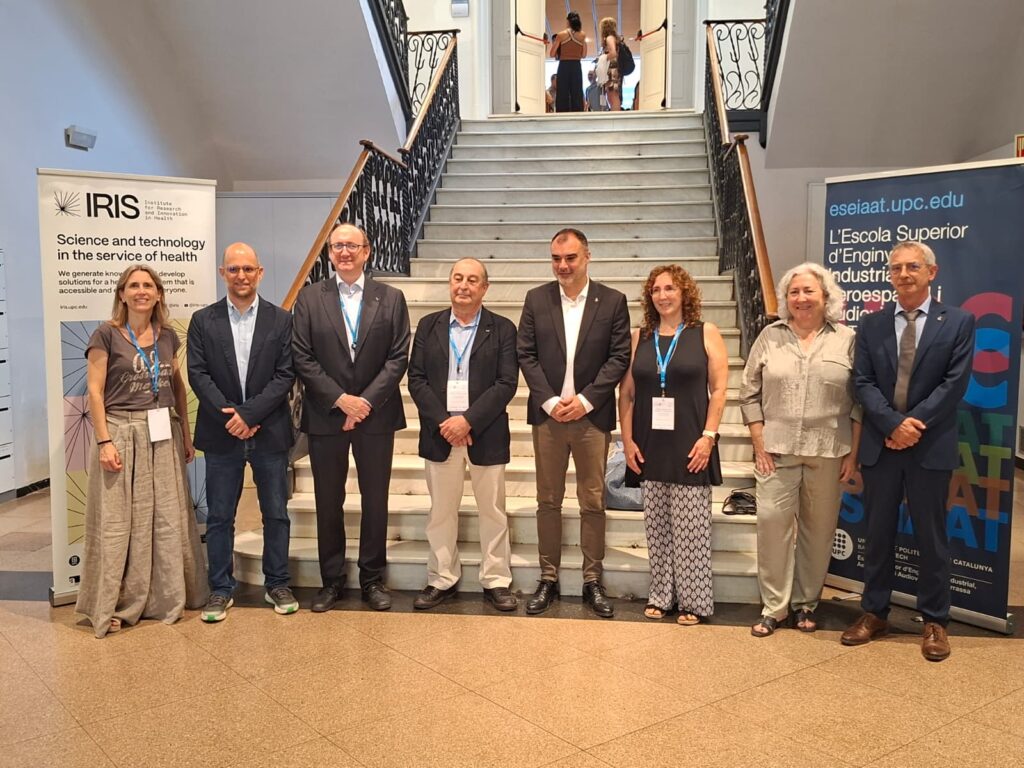
The conference was opened by Josep Maria Font, Director of IRIS; Jordi Voltas, Director of the School of Industrial, Aerospace and Audiovisual Engineering of Terrassa (ESEIAAT); Jordi Ballart, Mayor of Terrassa; and Francesc Torres, Rector of the Universitat Politècnica de Catalunya (UPC). In their opening remarks, they highlighted the strategic role of collaboration between academia, healthcare institutions, industry and public administrations in addressing the healthcare challenges of the future, while reaffirming Terrassa’s position as a leading hub for health innovation.
Under the title Research that Heals: UPC, Technology and the Future of Healthcare, the conference showcased research projects already making their way from the laboratory to clinical practice. Presentations covered topics ranging from biomaterials for bone regeneration and nanofibres for cancer treatment to sweat monitoring technologies, innovations in visual health, smart textiles and digital immersive twins for medicine.
The programme also featured the first edition of the PhD-IRIS Awards, which recognised outstanding doctoral research in healthcare innovation. Eight doctoral researchers presented innovative projects addressing some of tomorrow’s major healthcare challenges, highlighting the strength of emerging talent and the key role of early-career researchers in shaping the future of health technologies.
Collaboration emerged as one of the conference’s central themes. Speakers highlighted Terrassa’s growing healthcare innovation ecosystem, where universities, hospitals, research institutes, companies and public institutions work together to accelerate the translation of research into clinical practice. Examples ranged from AI models capable of predicting clinical risk and supporting preventive medicine to new materials designed to reduce infections and technologies that improve patient care.
The closing roundtable focused on one of the major challenges facing healthcare innovation: ensuring that technology responds to real clinical needs. Participants agreed that healthcare professionals must be involved from the earliest stages of innovation, that patients should play an active role throughout the development process, and that successful solutions require teams with diverse expertise.
One of the key ideas emerging from the discussion was the need to move beyond multidisciplinary and interdisciplinary collaboration towards a truly transdisciplinary approach. While multidisciplinary teams work in parallel and interdisciplinary teams contribute from their respective fields towards a common goal, transdisciplinary collaboration blurs the boundaries between disciplines, creating shared knowledge capable of addressing increasingly complex healthcare challenges.
The conference concluded by reinforcing IRIS’s mission to connect engineering, research and healthcare. As healthcare challenges become more complex, technological breakthroughs alone will not be enough. Their real impact will depend on the ability of researchers, clinicians, engineers, industry and patients to work together in developing solutions that improve people’s lives.