




GPI Image Processing Group

Principal investigator: Verónica Vilaplana
Website 
The GPI group advances health technologies through artificial intelligence, computer vision, and image processing, with a strong focus on medical applications. It develops robust computational tools to support clinical decision-making, enable early disease detection and prognosis, and improve patient outcomes. The group promotes interdisciplinary research, applies generative models to enrich training data, and fosters knowledge transfer through open-source software scientific dissemination, and collaboration with the industrial and healthcare sector.
Featured Projects
DigiPatICS – AI for Breast Cancer Diagnosis
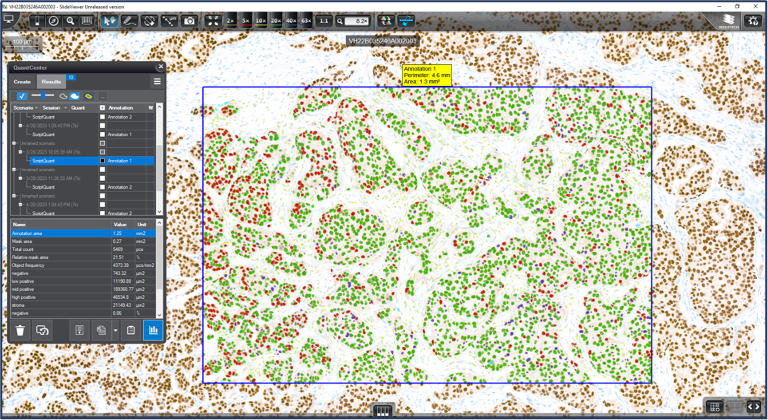
A large-scale project led by the Catalan Health Institute (ICS) to enhance diagnostic quality and patient safety through the integration of digital pathology and artificial intelligence. GPI developed advanced deep learning algorithms to automatically analyze whole-slide histopathology images and quantify key biomarkers such as HER2, Ki67, and hormone receptors in breast cancer with high precision and consistency. Since their deployment in 2023, the algorithms have been integrated into daily diagnostic routines across eight ICS hospitals, supporting 18 pathologists specialized in breast cancer. In 2024 alone, the system analyzed over 13,800 digital slides and contributed to the diagnosis and treatment planning of more than 4,400 patients. The project is now expanding to address additional pathologies, including lung and gastric cancer, cytology of bronchoalveolar lavage, and radiographic assessment of osteoarthritis.
FLUTE – Synthetic MRI for Privacy-Preserving AI
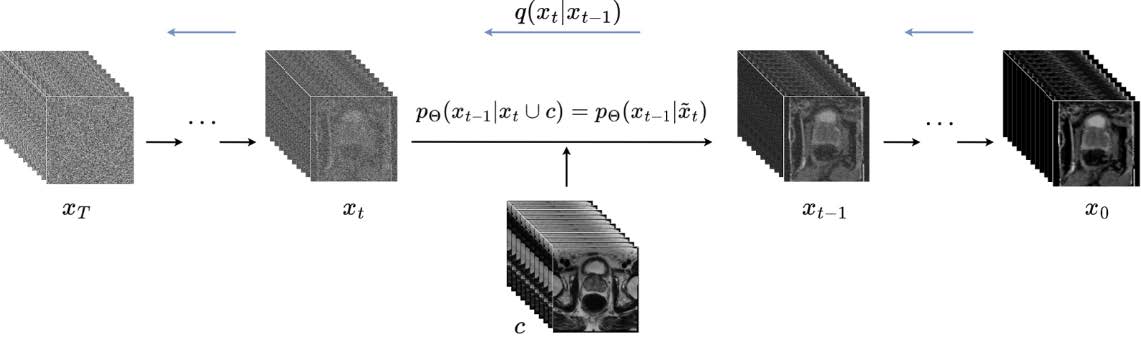
Within the European project FLUTE, GPI leads the development of deep generative models for the synthesis of prostate MRI sequences. This work addresses a key challenge in AI-driven healthcare: the lack of accessible, high-quality imaging data due to privacy and regulatory constraints. GPI developed a full synthetic MRI generation pipeline using GANs and diffusion models to create anatomically realistic T2-weighted, DWI, and ADC sequences. Models were trained and validated on public datasets (PI-CAI, ProstateX) with both quantitative and feature-based evaluations. A two-stage approach enables generation of biparametric MRI from segmentation masks and diagnostic labels, supporting privacy-preserving AI. The synthetic data integrates with federated learning systems for downstream tasks like csPCa prediction without exposing patient data.
La Marató TV3 – AI for Melanoma Prognosis and Stratification
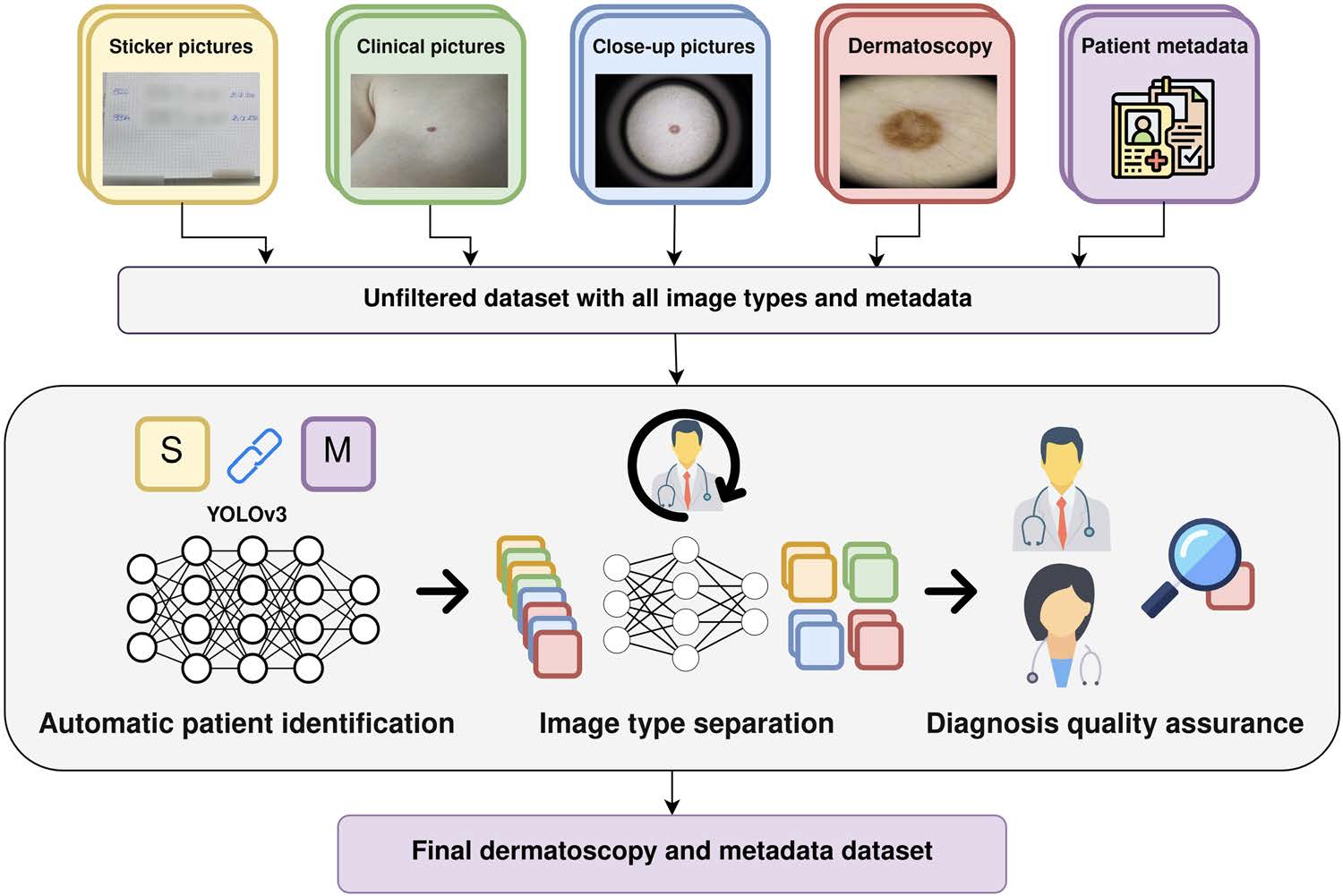
Funded by La Marató de TV3, this project aimed to improve survival prediction in melanoma patients through AI-driven risk modeling. GPI developed the AID-MM system, a deep learning-based tool that integrates clinical, genetic, and behavioral data to estimate the risk of metastasis, relapse, and death. In parallel, the group developed models for the analysis of histopathology images, focused on predicting features such as sentinel lymph node involvement or gene mutations. The project also emphasized transparency and clinical integration, introducing SurvLIMEpy, an open-source library for explaining survival predictions, and visual heatmaps to support interpretability.
DigiPatICS – AI for Breast Cancer Diagnosis
A large-scale project led by the Catalan Health Institute (ICS) to enhance diagnostic quality and patient safety through the integration of digital pathology and artificial intelligence. GPI developed advanced deep learning algorithms to automatically analyze whole-slide histopathology images and quantify key biomarkers such as HER2, Ki67, and hormone receptors in breast cancer with high precision and consistency. Since their deployment in 2023, the algorithms have been integrated into daily diagnostic routines across eight ICS hospitals, supporting 18 pathologists specialized in breast cancer. In 2024 alone, the system analyzed over 13,800 digital slides and contributed to the diagnosis and treatment planning of more than 4,400 patients. The project is now expanding to address additional pathologies, including lung and gastric cancer, cytology of bronchoalveolar lavage, and radiographic assessment of osteoarthritis.
FLUTE – Synthetic MRI for Privacy-Preserving AI
Within the European project FLUTE, GPI leads the development of deep generative models for the synthesis of prostate MRI sequences. This work addresses a key challenge in AI-driven healthcare: the lack of accessible, high-quality imaging data due to privacy and regulatory constraints. GPI developed a full synthetic MRI generation pipeline using GANs and diffusion models to create anatomically realistic T2-weighted, DWI, and ADC sequences. Models were trained and validated on public datasets (PI-CAI, ProstateX) with both quantitative and feature-based evaluations. A two-stage approach enables generation of biparametric MRI from segmentation masks and diagnostic labels, supporting privacy-preserving AI. The synthetic data integrates with federated learning systems for downstream tasks like csPCa prediction without exposing patient data.
La Marató TV3 – AI for Melanoma Prognosis and Stratification
Funded by La Marató de TV3, this project aimed to improve survival prediction in melanoma patients through AI-driven risk modeling. GPI developed the AID-MM system, a deep learning-based tool that integrates clinical, genetic, and behavioral data to estimate the risk of metastasis, relapse, and death. In parallel, the group developed models for the analysis of histopathology images, focused on predicting features such as sentinel lymph node involvement or gene mutations. The project also emphasized transparency and clinical integration, introducing SurvLIMEpy, an open-source library for explaining survival predictions, and visual heatmaps to support interpretability.