

Research

12 expert teams working together to innovate in health technologies.

IRIS is made up of 12 accredited research groups from the UPC, each of them contributing deep expertise in a specific field of health-related research and innovation.

These groups work collaboratively, covering a wide range of scientific and technological areas — from biomedical imaging and signal processing, to biomaterials, biomechanics, robotics, data science, graphic interaction and several health innovations.

SERVICES

01
02
03

Applied and Fundamental Research & Specialized Services

We combine applied research with fundamental scientific investigation to develop advanced technologies for diagnosis, treatment, assistance, and rehabilitation, alongside innovative biomedical materials and predictive medical data analytics. These solutions empower us to tackle diseases with enhanced precision, support healthcare professionals effectively, and elevate patients' quality of life.

Technology Transfer

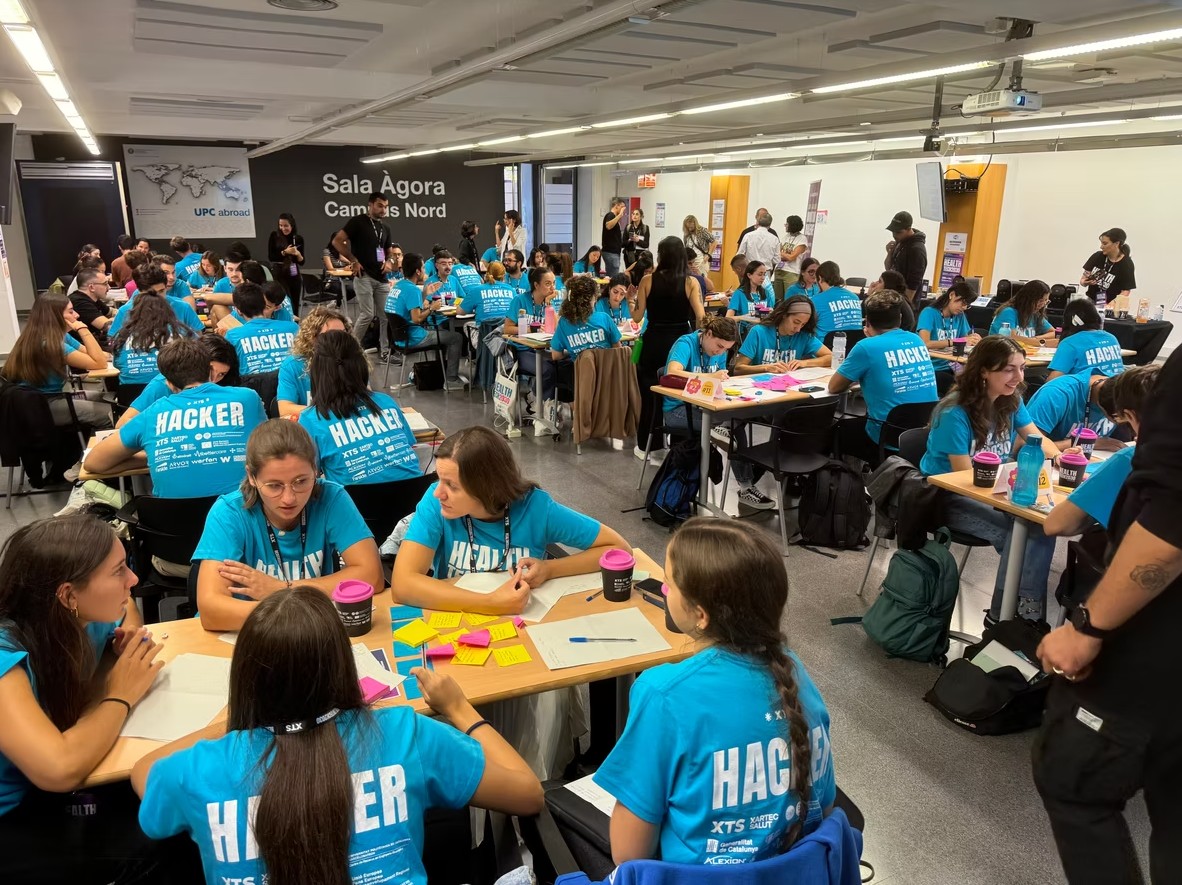
We translate knowledge into impactful solutions. We streamline the transfer of our findings to industry and the healthcare sector, transforming research into tangible real-world applications through spin-offs, patents, and strategic business partnerships. Key initiatives like the Xartec Salut network, spearheaded by IRIS, are crucial in realizing this.

Talent Development

We cultivate the next generation of leaders who will shape the future of health. Through our teaching at the UPC and active involvement in international projects and collaborations, we foster a dynamic learning ecosystem that equips future professionals to lead in addressing tomorrow's healthcare challenges.

01

Applied and Fundamental Research & Specialized Services

We combine applied research with fundamental scientific investigation to develop advanced technologies for diagnosis, treatment, assistance, and rehabilitation, alongside innovative biomedical materials and predictive medical data analytics. These solutions empower us to tackle diseases with enhanced precision, support healthcare professionals effectively, and elevate patients' quality of life.

02

Technology Transfer

We translate knowledge into impactful solutions. We streamline the transfer of our findings to industry and the healthcare sector, transforming research into tangible real-world applications through spin-offs, patents, and strategic business partnerships. Key initiatives like the Xartec Salut network, spearheaded by IRIS, are crucial in realizing this.

03

Talent Development

We cultivate the next generation of leaders who will shape the future of health. Through our teaching at the UPC and active involvement in international projects and collaborations, we foster a dynamic learning ecosystem that equips future professionals to lead in addressing tomorrow's healthcare challenges.

PUBLICATIONS

The research carried out at our institute is reflected in a wide range of scientific publications.

This section gathers peer-reviewed articles, book chapters, and other relevant scientific outputs generated by the teams affiliated with the institute.

Research Areas

Advanced Medical Diagnosis and Treatment

Technologies that help healthcare professionals detect and treat diseases with greater precision.

Medical Image and Video Processing: We develop algorithms to interpret medical images (such as MRIs, CT scans, or ultrasounds), helping to diagnose diseases faster and more accurately.

Technologies that help healthcare professionals detect and treat diseases with greater precision.

Medical Image and Video Processing: We develop algorithms to interpret medical images (such as MRIs, CT scans, or ultrasounds), helping to diagnose diseases faster and more accurately.

Biomedical Signal Analysis: We study signals generated by the body and its organs — such as heart activity (ECG), brain activity (EEG), or muscles — to extract information that helps detect diseases, monitor treatments, or develop smart medical devices.

Physiological Process Simulations: We create mathematical models that mimic the functioning of body organs, allowing better understanding and planning of advanced treatments.

Intelligent Assistance and Rehabilitation

Technological solutions for recovery, support, and improving patients' quality of life.

Intelligent Robotics and Autonomous Systems: We develop robots and intelligent systems that assist patients, rehabilitation, surgery, or hospital logistics.

Technological solutions for recovery, support, and improving patients' quality of life.

Intelligent Robotics and Autonomous Systems: We develop robots and intelligent systems that assist patients, rehabilitation, surgery, or hospital logistics.

Serious Games and Virtual Reality Applied to Health: We use video games and simulations for therapy, rehabilitation, and medical training.
3D Interaction and Visualization Systems: We create interfaces to facilitate communication between professionals and patients, and to visualize complex medical data.

Wearable and Portable Technologies for Rehabilitation and Monitoring: We design and evaluate sensors and devices that support motor recovery and continuous monitoring in real-life environments.

Movement Analysis and Biomechanics: We study human movement and develop neuromusculoskeletal models to optimize rehabilitation and the design of assistive devices.

Medical Materials and Engineering

We develop materials, devices, and technologies to improve the medicine of the future.

Biomaterials and Tissue Engineering: We research and design new biocompatible materials for implants, prostheses, or tissue regeneration.

We develop materials, devices, and technologies to improve the medicine of the future.

Biomaterials and Tissue Engineering: We research and design new biocompatible materials for implants, prostheses, or tissue regeneration.

Biomechanical Engineering: We study the mechanical behavior of the human body to improve the design of medical and orthopedic devices or rehabilitation tools.

Biomedical Electronic Instrumentation: We design and develop electronic devices for medical use, such as sensors for vital sign monitoring, diagnostic equipment, or smart surgical instruments.
Antimicrobial Strategies Without Antibiotics: Creation of materials that prevent infections without the need for antibiotics, to combat bacterial resistance.

Oncological Applications with Plasma and Biomaterials: We develop new therapies combining advanced technologies for cancer treatment.

Data Science Applied to Health

We transform biomedical data into knowledge to improve research and healthcare.

Biostatistics and Bioinformatics: We analyze large volumes of biomedical data to better understand diseases, treatments, and health patterns.

We transform biomedical data into knowledge to improve research and healthcare.

Biostatistics and Bioinformatics: We analyze large volumes of biomedical data to better understand diseases, treatments, and health patterns.

Computational Biology and Complex Systems: We simulate and analyze complex biological phenomena, such as cellular system functioning, to better understand living systems and make predictions.

Neurological Computing and Pattern Recognition: We develop models to interpret neural processes and improve medical image analysis.

Applied Artificial Intelligence: Integration of diverse data sources for more accurate predictions, with interpretable models that generate clinical trust.